

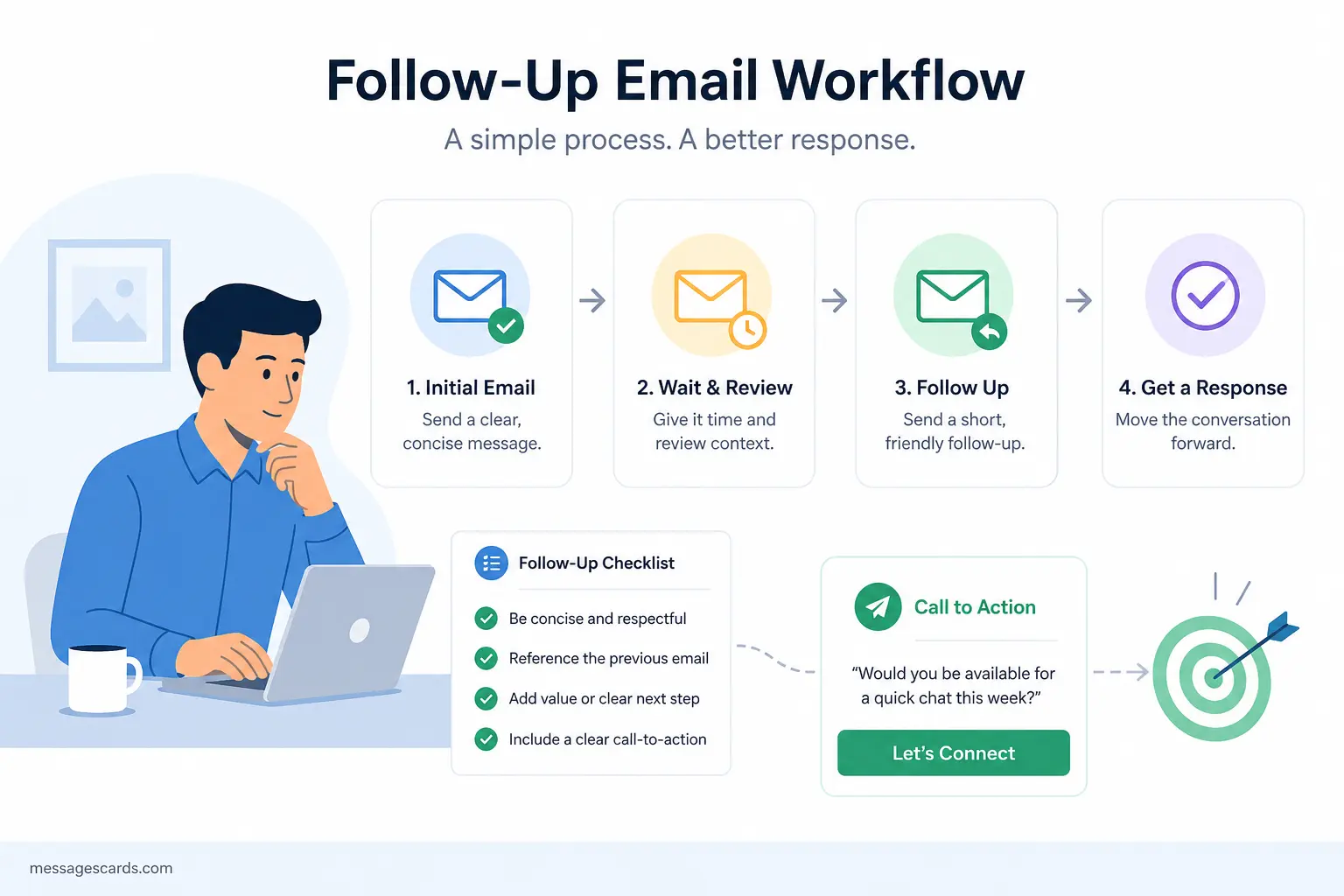
Timing is everything. Send it too soon, and you look impatient. Wait too long, and you risk being forgotten.
Data suggests the ideal timing for a first follow-up is 2–3 days after your initial email. This gives the recipient enough time to see your message without feeling rushed.
If you’re dealing with a job application or client outreach, you might extend that to 3–5 days. The key is to stay relevant without being intrusive.
What To Say After Being Ignored
Here’s where most people mess up. They send something like:
“Just checking in…”
That phrase has been overused to the point of invisibility. Instead, your follow-up should add value or context.
Try approaches like:
- Referencing your previous message briefly
- Adding new information or insight
- Asking a simple, clear question
A strong example:
“Hi [Name], I wanted to share a quick idea that might help with [specific problem]. Would you be open to a quick chat this week?”
This shifts your message from reminder to value.

Polite Professional Ways To Follow Up By Email
Examples of Polite Follow-Up Emails
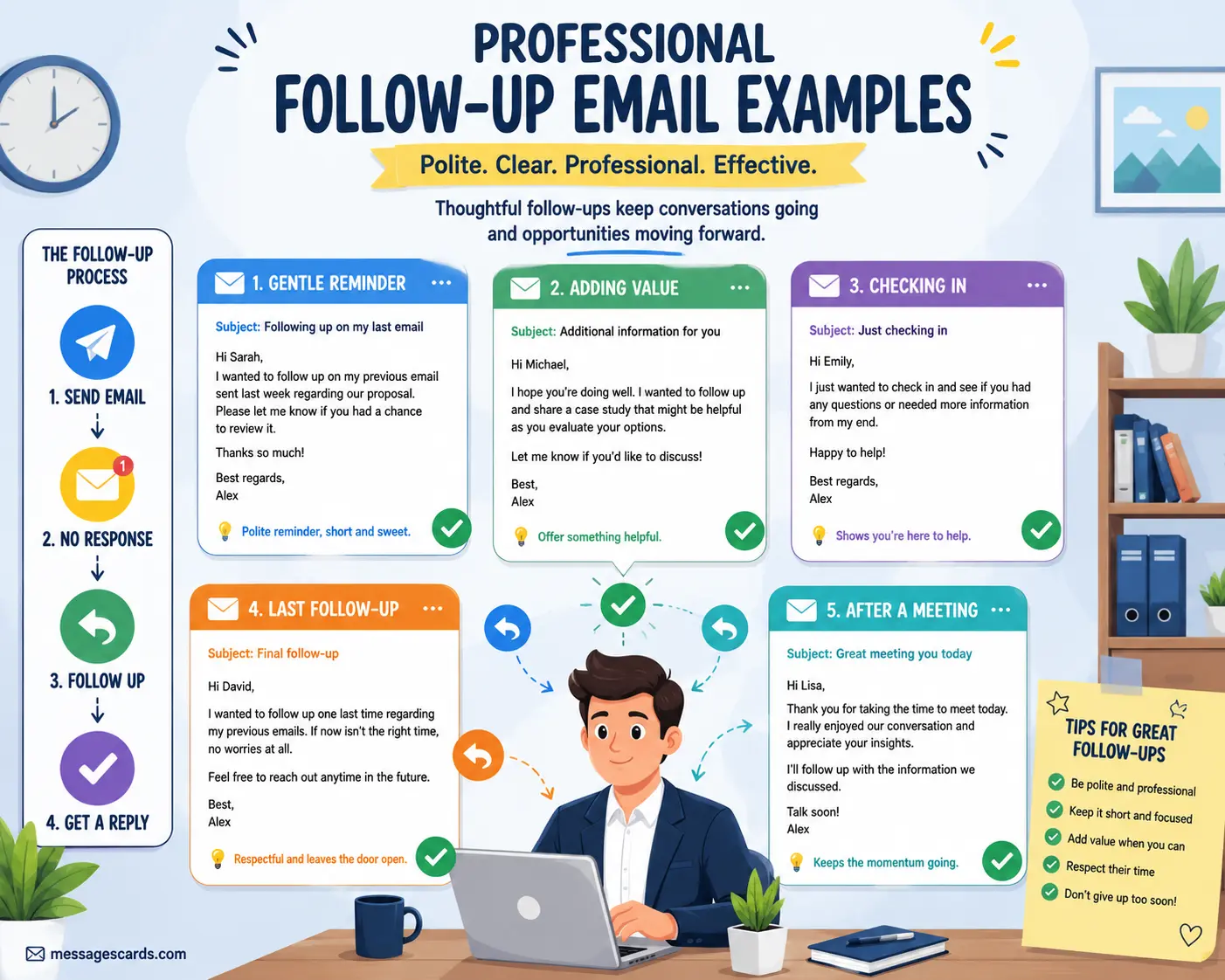
A polite follow-up email feels human, not robotic. It sounds like something you’d actually say in a conversation.
Example:
“Hi [Name], I hope you’re doing well. I just wanted to follow up on my previous message in case it got buried. I’d love to hear your thoughts when you have time.”
Notice how it’s simple, respectful, and not demanding. That’s the sweet spot.
Short Professional Ways To Follow Up By Email
Best Short Follow-Up Templates
Effective short follow-ups usually follow this structure:
- One sentence for context
- One sentence for value or reminder
- One simple call-to-action
Example:
“Hi [Name], just checking if you had a chance to review my last email. Would you be open to a quick call this week?”
That’s it. No fluff, no overload.
Professional Ways To Follow Up By Email After Interview
What Hiring Managers Expect
Hiring managers don’t expect a novel; they expect appreciation and professionalism.
Your email should:
- Thank them for their time
- Reaffirm your interest
- Mention something specific from the interview
Example:
“Thank you for the opportunity to discuss the role. I especially enjoyed our conversation about [topic]. It reinforced my excitement about joining your team.”
Professional Ways To Follow Up By Email On Job Application
How Long To Wait Before Following Up
Patience matters here. Wait at least 5–7 business days after applying before following up.
Anything sooner may come across as pushy.
What To Include In Your Email
Keep it focused:
- Mention the job title
- Express continued interest
- Ask for updates politely
Example:
“I wanted to follow up regarding my application for [position]. I remain very interested and would appreciate any updates you can share.”
Professional Ways To Follow Up By Email With Client
Following Up Without Being Salesy
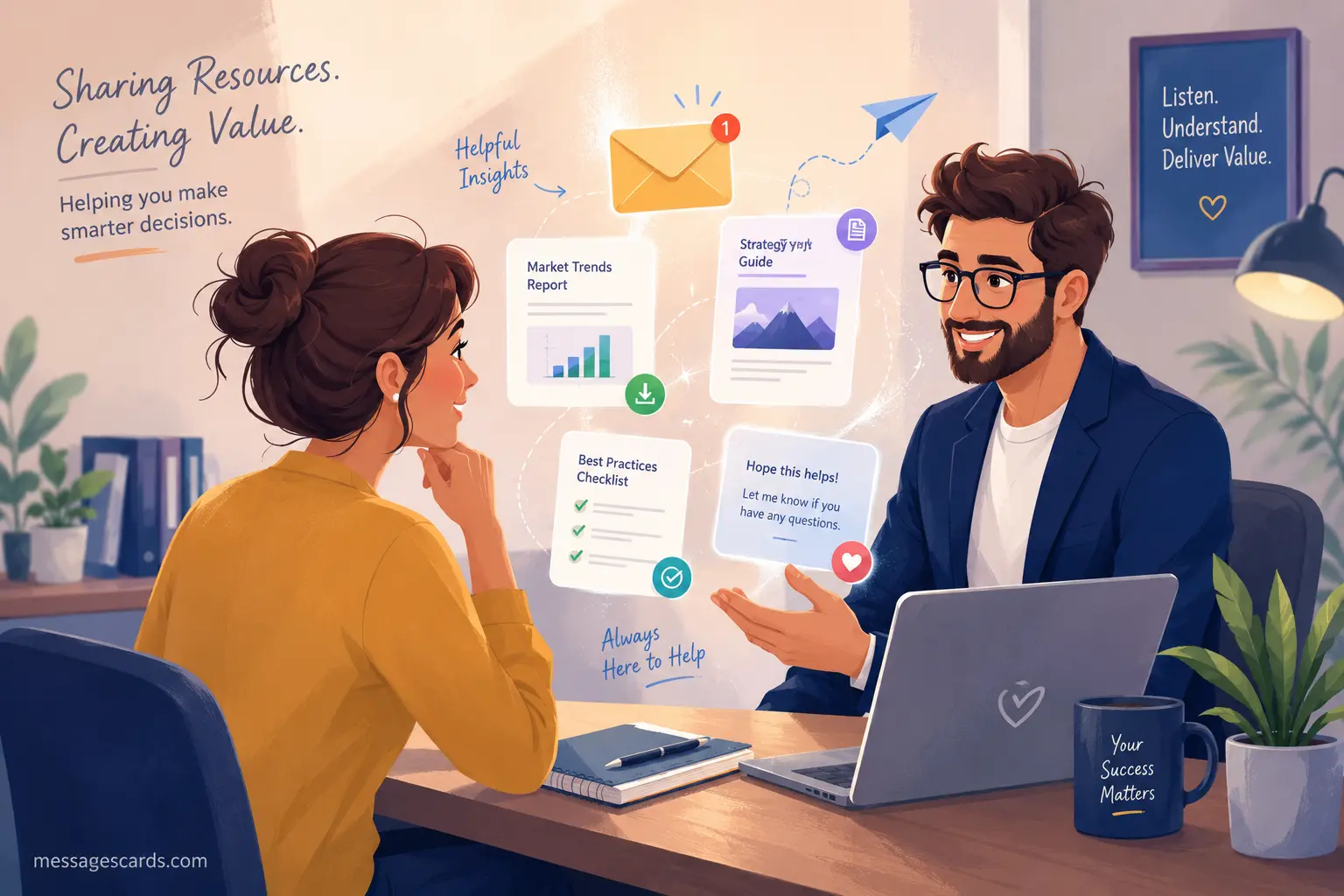
Nobody likes a pushy salesperson. The trick is to shift from selling to helping.
Instead of:
“Are you ready to move forward?”
Try:
“I came across something that might be helpful for your project…”
This changes the tone completely.
Re-engaging Cold Clients
Cold clients aren’t lost; they’re just inactive. A good follow-up can bring them back.
Use:
- New insights
- Updated offers
- Relevant industry trends
Remember, relevance beats repetition every time.
Formal Professional Ways To Follow Up By Email
When Formal Language Is Required
Formal emails are best for:
- Corporate communication
- Government roles
- Academic settings
Formal Email Examples
Example:
“Dear Mr. Smith, I hope this message finds you well. I am writing to follow up on my previous correspondence regarding…”
Formal doesn’t mean stiff; it means respectful and structured.
Professional Ways To Follow Up By Email Without Being Pushy
The “Value-First” Approach
The secret to non-pushy follow-ups? Always give before you ask.
Each follow-up should include:
- A tip
- A resource
- A new perspective
This keeps your emails welcome, not annoying.
Mistakes That Make You Sound Desperate
Avoid:
- Repeating the same message
- Sending too frequently
- Using guilt-based language
These kill your credibility fast.
Best Professional Ways To Follow Up By Email (Messages in Bullet List Style)
Here are ready-to-use follow-up messages you can copy and adapt:
- Hi [Name], just wanted to follow up on my previous email. Let me know if you’d like me to resend any details.
- Hi [Name], I know things get busy; just bumping this up in your inbox.
- Hi [Name], I had another idea that might help with [specific issue]. Happy to share if you’re interested.
- Hi [Name], I’ll keep this brief; would you be open to a quick call this week?
- Hi [Name], just checking if this is still a priority for you.
- Hi [Name], I didn’t hear back, so I wanted to see if this is still relevant.
- Hi [Name], I’ll make this my last message; feel free to reach out anytime.
FAQs
1. How many follow-up emails should I send?
Most experts recommend 3–5 follow-ups. Data shows sequences with multiple follow-ups can increase reply rates by up to 3x
2. What is the best time to send a follow-up email?
Late morning (around 9–11 AM) on weekdays tends to perform best based on recent benchmarks
3. How long should a follow-up email be?
Short and direct. Ideally under 100–150 words to match modern reading habits.
4. Should I follow up if I get no response?
Yes. Silence usually means the person is busy, not uninterested.
5. What should I avoid in follow-up emails?
Avoid being repetitive, overly aggressive, or vague. Always add value with each follow-up.

Logan Mitchell is an American blogger and professional content strategist from Seattle, Washington, known for his expertise in online publishing and editorial content development. With nearly a decade of hands-on experience, Logan has built a reputation for delivering well-researched, trustworthy content across multiple niches, including communication, relationships, and digital expression. Through his work on messagescards.com, he helps users discover impactful messages and thoughtful wording tailored to real-life situations. His writing style blends professionalism with a human touch, making his content both reliable and easy to connect with.